Authenticated Users and Digital ID
Restoring Trust in the Digital Town Square
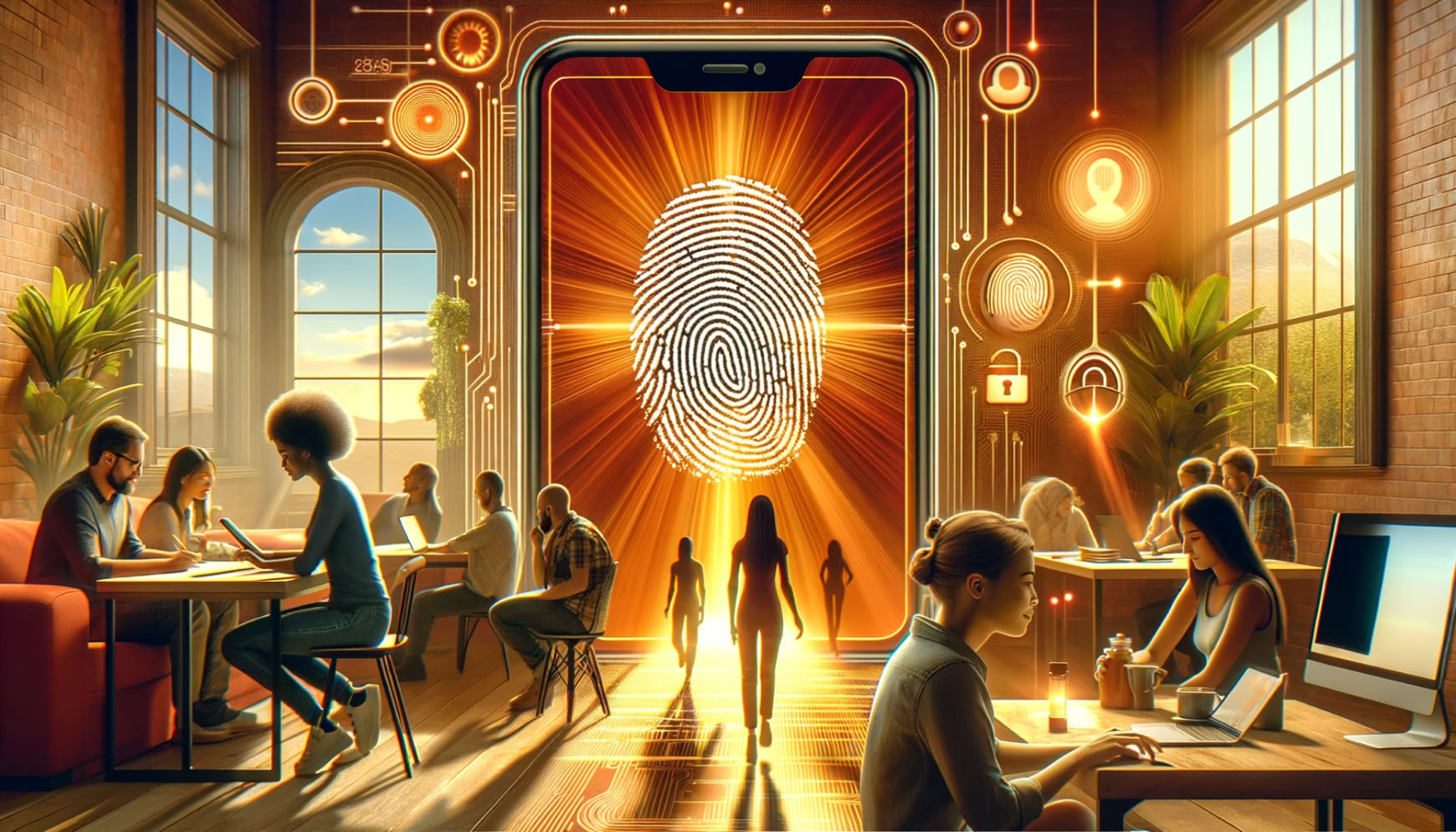
“Every account is authenticated and secured with Apple's industry-leading biometric technology to protect registered citizens from harassment and abuse by anonymous bots and trolls.
Every voter gets a voice in this secure digital town square, and every local business, political representative, and community organization gets its own authenticated account to help end the fraud and abuse that flood the internet and profit-driven social media.”
- MyVote Demo Video
The Problem: When Nobody Knows If You’re Real
Social media promised to connect us. Instead, it drowned us in fakery.
The crisis we face is unprecedented.
In the 2020 election cycle alone, researchers identified millions of bot accounts spreading political misinformation on Twitter. During the pandemic, fake health accounts convinced millions of Americans to distrust masks and vaccines, trust bleach, and ignore doctors. Right now, as you read this, foreign intelligence services operate thousands of accounts pretending to be American citizens, sowing division and eroding trust in our institutions.
But bots are just the beginning:
• Troll farms employ real people working in shifts to harass, intimidate, and silence legitimate voices—especially women, minorities, and anyone who challenges powerful interests.
• Impersonator accounts pretend to be your mayor, your congressman, local businesses, or even your neighbors, spreading false information that’s impossible to debunk before it spreads.
• Coordinated inauthentic behavior creates the illusion of grassroots movements—what looks like thousands of concerned citizens is actually dozens of paid operatives with hundreds of fake accounts.
• Identity theft enables bad actors to open accounts in your name, damage your reputation, and even commit fraud while hiding behind your stolen identity.
• Anonymous harassment drives good people out of public discourse entirely because there’s no accountability when anonymity shields abusers.
The human cost is staggering:
• Teachers quit social media after coordinated harassment campaigns make their lives miserable—and never find out that most of their attackers weren’t even real people.
• Local officials receive death threats from accounts they can’t report because there is no way to verify who is behind them.
• Small businesses lose customers to fake review accounts they can’t challenge.
• Parents make medical decisions based on advice from “doctors” who are actually marketing bots.
And through it all, the platforms profit. Facebook, Twitter, TikTok—their business model depends on engagement, and nothing drives engagement like outrage, fear, and conflict. They have no incentive to solve the bot problem because bots inflate their user numbers, click on ads, and keep real users doom-scrolling through manufactured controversies.
The result? Americans have stopped trusting anything they see online. We’ve lost faith in our ability to distinguish truth from fiction, real people from fake accounts, genuine grassroots movements from astroturfed manipulation. Our digital town square has become a place where nobody believes anyone and everyone suspects everyone.
This isn’t sustainable. Democracy requires informed citizens having good-faith conversations. That’s impossible when half the conversation is fake.
The Solution: One Person, One Voice, One Verified Identity
MyVote implements universal authenticated accounts using biometric verification that’s already in your pocket. If you have an iPhone or Android device with facial recognition or fingerprint scanning, you have everything you need to prove you are a real, unique human being.
Here’s how MyVote authentication works:
Step 1: Initial Registration
When you create your MyVote account, your identity is verified once using a government-issued ID (driver’s license, passport, or state ID card) combined with biometric verification. The system confirms:
• You are who you claim to be (matching photo and information).
• You are a registered U.S. citizen or legal resident.
• You are a unique person (not someone who already has an account).
Step 2: Secure Biometric Binding
Your account is then bound to your device’s biometric security—Face ID, Touch ID, or Android biometric authentication. This means:
• Only you can access your account using your unique biological characteristics.
• No one can steal your password because your face or fingerprint is your password.
• You can’t forget your credentials or write them on a Post-it note.
• Even if someone steals your phone, they cannot access your MyVote account without your biometric data.
Step 3: Multi-Device Security
MyVote is accessible from multiple devices (phone, tablet, computer), but each device requires biometric verification on login. If you get a new phone, you verify your identity again using your existing biometric data plus a secure transfer code. This prevents account takeovers while maintaining convenience.
Step 4: Living Authentication
Modern biometric systems include liveness detection—verifying you are a real person present at the moment, not a photo, video, or deepfake. This means:
• The system cannot be fooled with a picture of you.
• Sophisticated spoofing attempts are detected and blocked.
• You must be physically present to authenticate.
The key difference: Your biometric data never leaves your device. Apple’s Secure Enclave and Android’s Trusted Execution Environment process biometrics locally and only send encrypted confirmation tokens to MyVote. The platform never stores your fingerprint or face data—it only confirms that your device has been authorized by the user.”
Every Voice Authenticated: The Power of Verified Identity
With universal authentication, MyVote creates different account types that restore trust to digital civic engagement.
Verified Citizen Accounts
Every registered voter has a verified personal account with a visual verification badge. When you post, comment, or vote in a poll, everyone knows you are a real person with a verified identity. You can still use a pseudonym for privacy and display any name you choose—but the system guarantees you are a real, unique citizen and not a bot or foreign operative.
Official Representative Accounts
Mayor, city council members, state legislators, and congressional representatives all get official verified accounts that link directly to their position. When they post, you see verification that proves:
• This is really your elected official, not an impersonator.
• They currently hold the office they claim.
• Their account is directly tied to the official government record.
No more fake “Congressman Smith” accounts spreading misinformation. No more wondering if that response from your senator is real or a staffer gone rogue. Official accountability, transparent and verifiable.
Verified Business Accounts
Local businesses, from the corner café to the regional hospital, can get verified business accounts tied to their business license and tax ID. When a restaurant responds to a complaint or a shop announces a sale, you know it’s the actual business, not a competitor sabotaging their reputation or a scammer phishing for credit cards.
Authenticated Organization Accounts
Nonprofits, community groups, churches, schools, and civic organizations will verify their accounts using their EIN and official registration information. When you read a comment by “Springfield Parents for Better Schools,” you can verify it’s a real registered organization, see who the officers are, and confirm they are actually from Springfield—not an astroturf group funded by out-of-state interests pretending to be local.
Professional Credential Verification
Doctors, lawyers, teachers, and other licensed professionals can link their professional credentials to their accounts. When someone giving medical advice claims to be a doctor, you can verify they are actually licensed and in good standing—not a wellness influencer selling snake oil.
Why Anonymity’s Time Is Over
(In Civic Spaces)
Some critics will cry, “But what about anonymity? What about whistleblowers?”
Let’s be clear: MyVote is for civic engagement, not journalism. There are appropriate places for anonymity—investigative journalism, whistleblower protections, support groups for abuse survivors. MyVote is not trying to replace those spaces.
MyVote is the digital equivalent of a town hall meeting. In a real town hall, you can see who’s speaking. You know if the person asking a question is actually your neighbor or a paid operative from out of town. You can recognize when the same person keeps coming to the microphone pretending to represent different viewpoints. That’s not surveillance—it’s transparency.
The benefits of authenticated civic spaces far outweigh the costs.
1. Accountability Restores Civility
When someone can’t hide behind anonymity, they might think twice before posting. Research shows that authenticated online spaces and identity-verified settings reduce aggressive behavior and foster greater accountability. Not because of censorship—but because accountability encourages the same social norms that make in-person community meetings functional.
2. Stopping Foreign Interference
Russia, China, and Iran have spent millions creating fake American personas to influence our elections and divide us. Authentication makes this exponentially harder. They can try to create all the fake accounts they want—they will never be able to pass biometric verification tied to real U.S. identity documents.
3. Ending Bot Manipulation
Bots don’t have fingerprints. Bots can’t pass facial recognition. One authenticated human = one account. Period. This destroys the power of well-funded troll farms, astroturf campaigns, and anyone trying to manufacture fake consensus.
4. Protecting the Vulnerable
Paradoxically, authentication protects privacy better than anonymity. Right now, anyone can impersonate you or stalk you across unverified platforms. With authentication, harassment becomes traceable and prosecutable. Identity theft becomes nearly impossible.
5. Rebuilding Trust
When we know every person in a conversation is real, when we can verify that our elected officials are actually who they claim, when we can trust that the local business page is actually local—suddenly, productive conversation becomes possible again.
Real-World Results: What Authentication Achieves
Countries and platforms that have implemented strong authentication have seen transformative results.
South Korea’s Real-Name System (2005-2012) effectively reduced anti-social behavior by up to 30% at the national level. though it was ultimately repealed due to data breaches and constitutional concerns—problems that MyVote’s decentralized biometric approach solves. The Korean Constitutional Court found that the real-name policy reduced malicious comments from 13.9% to 13.0% (a decrease of only 0.9 percentage points), demonstrating that traditional identity verification without strong security is insufficient. MyVote builds on both the successes (behavioral changes) and failures (centralized data vulnerability) of South Korea’s experiment.
Estonia’s Digital ID enables 99% digital government services while maintaining extremely low fraud rates and high citizen satisfaction. Authentication hasn’t destroyed privacy—it has enhanced it by giving citizens control.
Facebook’s Real-Name Experiment showed that even weak authentication (just asking for real names) reduced harassment and improved conversation quality. Imagine what strong biometric verification achieves.
China’s Social Credit System is often cited as the nightmare scenario—but it’s the perfect example of what MyVote is NOT. China’s system is government surveillance tracking every purchase, conversation, and movement to assign obedience scores. MyVote is a publicly funded and auditable authentication system designed solely for civic participation. MyVote identity doesn’t follow a citizen to Amazon, track browsing, or monitor private messages. It exists solely to verify that only real citizens are participating in democratic processes.
Why This Matters to You
Safety: MyVote allows participation in civic conversations without fear of anonymous harassment campaigns. When someone crosses the line, they can be held accountable. When someone is threatening, law enforcement can investigate instead of hitting a wall of anonymity.
Trust: You can believe that the person presenting themselves as your mayor actually is your mayor. Community organizations are verified as legitimate. And fake astroturf campaigns can’t pretend to be real grassroots movements.
Empowerment: Your voice carries weight because everyone knows you’re a real person, not a bot inflating engagement metrics. One person, one voice—finally meaningful in the digital age.
Privacy: Paradoxically, strong authentication protects privacy better than anonymity. Nobody can impersonate you, steal your identity, or frame you for things you didn’t say. You control your verified identity instead of hoping nobody abuses the anonymous chaos.
The Bottom Line
One authenticated human, one verified voice. No bots. No trolls. No foreign interference. No anonymous harassment. Just real citizens engaging in real democracy, protected by biometric security you already use every day—now applied to the civic space where your voice matters most.
The technology exists. The need is urgent. The choice is ours.
Real people. Real conversations. Real democracy.
That’s the promise of authenticated civic engagement. That’s the foundation MyVote builds upon.
Summary of Best Practices
How MyVote Implements
Authentication Securely
Privacy by Design
• Your biometric data never leaves your device.
• MyVote stores only encrypted tokens, not actual fingerprints or facial scans.
• You choose what name to display publicly (real name or pseudonym).
• Your full identity verification is visible only to you and system administrators investigating abuse.
• Your participation in discussions can use privacy-preserving display names while maintaining back-end accountability.
Progressive Verification Levels
Not all interactions require the same verification:
• Viewing public information: No account needed
• Participating in discussions: Verified citizen account
• Voting in binding referendums: Full identity + voter registration verification
• Commenting on sensitive topics: Additional verification checks may be required
Accessibility Accommodations
• Alternative verification methods for citizens who cannot use standard biometrics (injuries, disabilities, etc.).
• Assisted verification at public libraries and government offices for those without smartphones or computer access.
• Clear, simple processes with multilingual support and assistance.
Regular Security Audits
• Third-party penetration testing quarterly
• Open-source verification code for public review
• Bug bounty program rewarding security researchers who find vulnerabilities
• Transparent reporting of any breaches or attempted attacks
Legal Safeguards
• Strong warrant requirements for any law enforcement access to identity data
• Automatic notification when your data is accessed (except in specific court-approved emergency circumstances)
• Regular transparency reports showing aggregate statistics on verification, access requests, and security incidents